I’ve shared a lot here about how to appeal. This time, I’m talking about what really happened when I went through it myself. In short: I didn’t get exactly what I wanted, but I took the deal anyway, and I would do it again—with a few changes.
Where I started
My notice said my home was worth about $1.4 million, up roughly $300,000 in a year (the whole story is here). I filed online and asked for $1.15 million, backed by comparable sales and the appraisal my bank had ordered when I bought the place, which came in around $1 million.
I thought my case was strong. It turned out to be just decent.
What actually happened
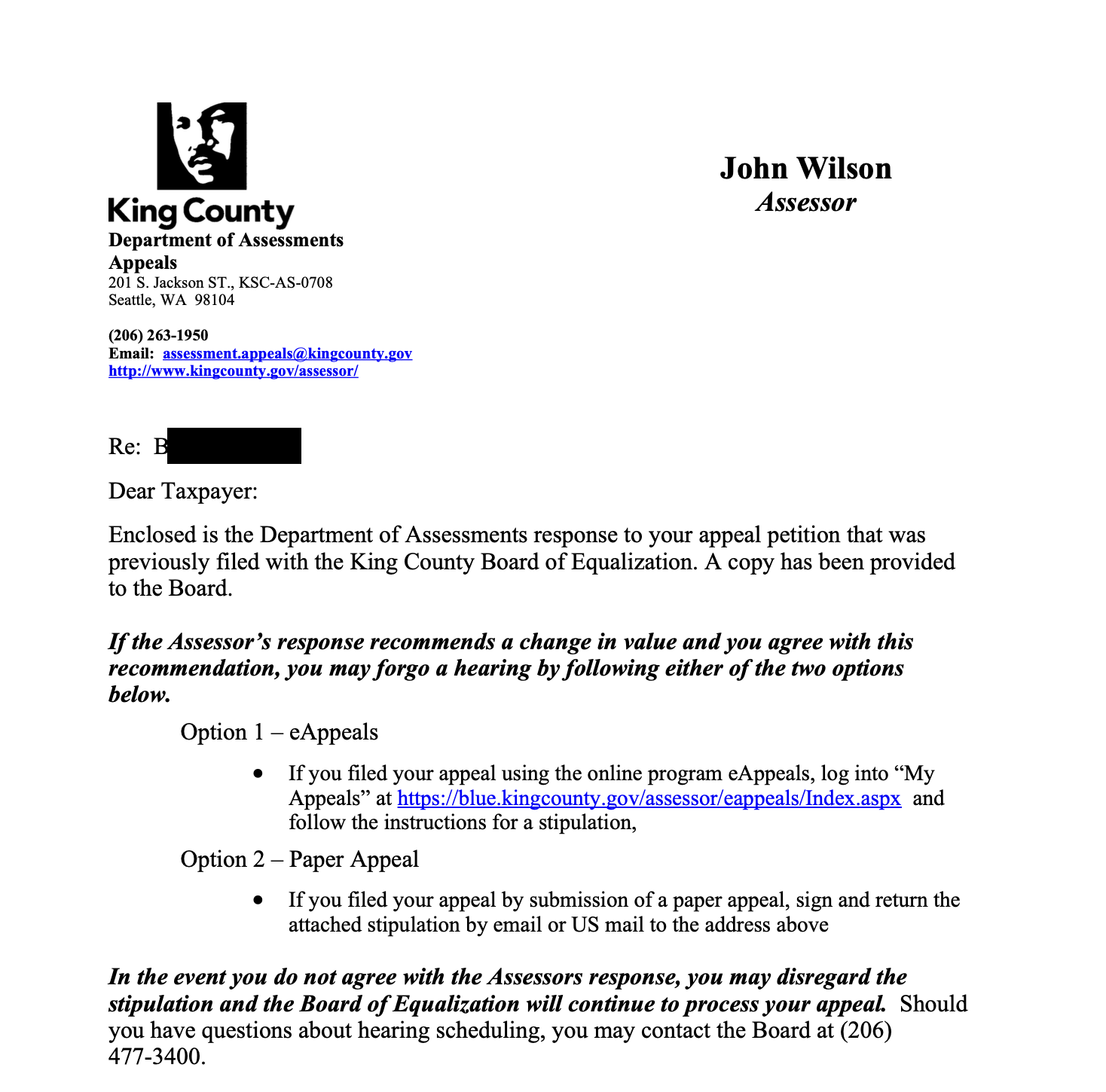
I never met with the Board. Before my hearing date, the Assessor’s office reviewed my petition and suggested a new value: about $1.3 million. They also sent a stipulation form, which basically means we both agree on this number and the hearing is canceled.
That’s about 5% off the original assessment. At King County’s average rate (about $9 per $1,000 of value), that’s roughly $700 a year back.
Why I took the smaller number
There’s one rule that really changes how you should approach a hearing. In Washington, the Assessor’s value is considered correct unless the owner can prove otherwise with “clear, cogent and convincing” evidence (RCW 84.40.0301). That’s a tough standard. The Board doesn’t just split the difference between two opinions; they want to see if you’ve actually shown the county is wrong.
So the real choice was: a guaranteed 5% now, or a shot at more against a standard that favors the county—with the very real possibility of walking out with nothing off. My comps were fine, not overwhelming. I signed.
What I’d do differently
- Better comps, closer to January 1. The Board judges the value on one date. Sales from the months right before it beat anything from the summer after.
- Less weight on my purchase appraisal. It was real evidence, but it was from the wrong date, and that’s the first thing a reviewer discounts.
- Ask for what the evidence supports, not what I hoped for. My ask was aggressive. A number that matches the median of good comps is harder to wave away.
The part that surprised me
The next year’s value was a bit lower again. I can’t say the appeal caused that, since each year’s value is calculated from scratch, but it didn’t jump back up either. I checked it the same way as soon as it arrived.
Is this typical?
This is just my experience with one appeal. Some people get more, some get nothing, and many cases settle just like mine, during the Assessor’s review. If you want the honest odds: having strong comparable sales matters much more than being upset, and meeting the deadline matters most of all.
If your number seems off, start by comparing it to what similar homes actually sold for. You can do this by hand or use the free check I made after my own experience. Then follow the step-by-step guide.